

Find the Best Place to Watch the Meteor Shower
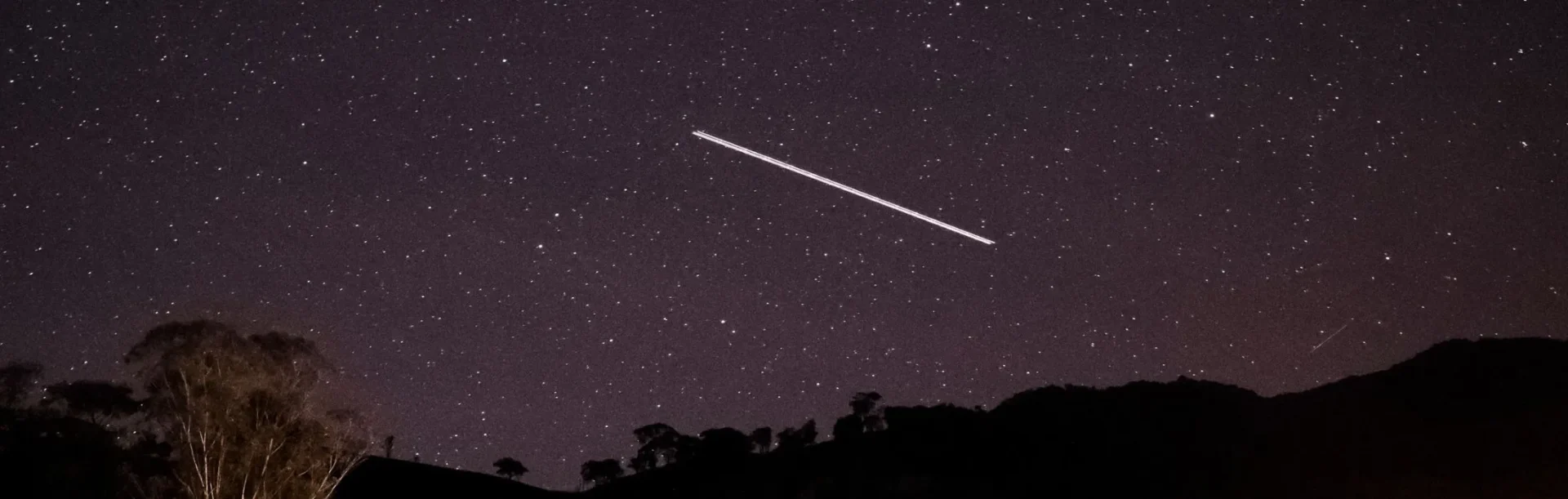
December brings more than holiday lights and winter adventures to Wyoming. It also brings the Geminid meteor shower, one of the most active and reliable meteor showers of the year. On the night of December 13–14, 2026, skywatchers around Jackson Hole will have an opportunity to watch bright meteors streak across the winter sky.
If you’re searching for the best place to watch the meteor shower, Jackson Hole’s dark skies offer a wonderful starting point. With a little planning, warm layers, and a clear night, you may catch one of the season’s most memorable celestial displays.

When Is the Geminid Meteor Shower in 2026?
The Geminids will be active from December 4–17, with peak activity expected overnight on December 13–14. Under ideal dark-sky conditions, observers may see approximately 40–50 meteors per hour, with higher rates possible in especially favorable circumstances.
Unlike some meteor showers that are best viewed just before dawn, the Geminids can offer good viewing opportunities starting in the evening. The constellation Gemini, where the meteors appear to originate, rises during the evening and climbs higher throughout the night.
For the best chance of seeing more meteors, try watching after midnight, when Gemini is higher in the sky. However, there’s no need to wait until the early morning hours to start looking. You could spot meteors earlier in the evening, too.
The Moon is expected to be only about 15% illuminated during the peak, so moonlight should cause relatively little interference. That makes 2026 a promising year to bundle up and spend some time beneath the stars.
What Makes the Geminids Special?
Most annual meteor showers originate from debris left behind by comets. The Geminids are different: their parent object is 3200 Phaethon, an unusual asteroid that follows an orbit bringing it close to the Sun.
As Earth passes through the debris stream associated with Phaethon, tiny particles enter our atmosphere at high speeds. They heat up and produce the bright streaks of light we call meteors, or shooting stars.
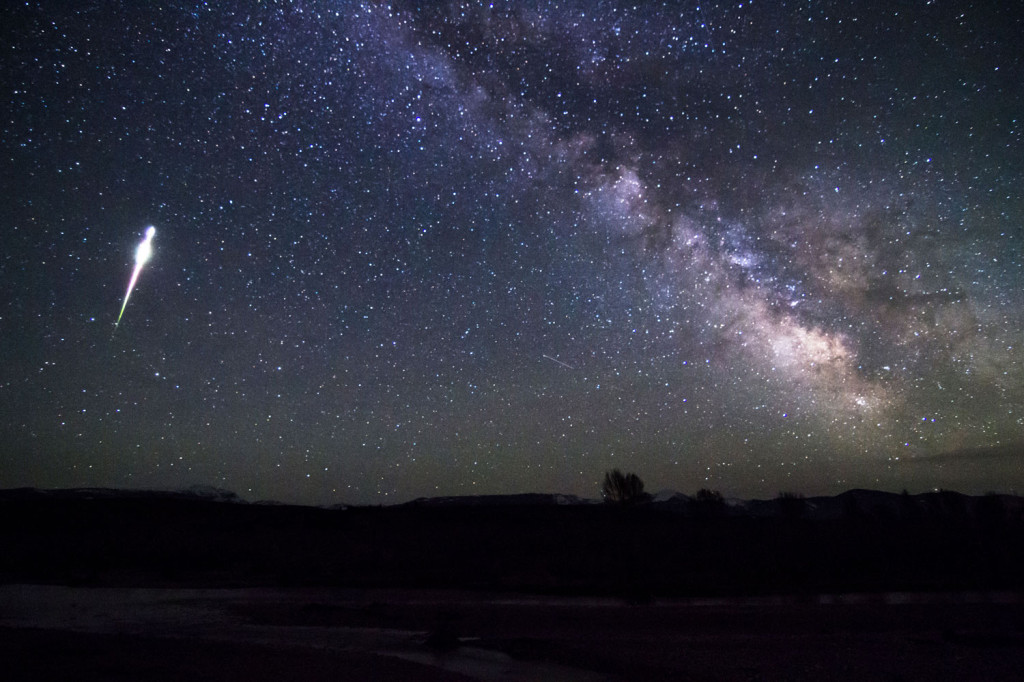
Geminid meteors are known for being bright and sometimes displaying yellow, green, or other colors. Under dark skies, the shower can produce a spectacular range of meteors, from brief streaks to especially brilliant flashes.
Of course, meteor showers are unpredictable. The published hourly rates assume ideal viewing conditions, and the actual number you’ll see depends on the weather, light pollution, and how much of the sky you can observe.
Finding the Best Place to Watch the Meteor Shower in Jackson Hole
The best place to watch the meteor shower is somewhere with a wide, unobstructed view of the sky and as little artificial light as possible. You don’t need a telescope or binoculars to enjoy the Geminids. Your eyes are the best tool for taking in meteors across a large area of the sky.
Jackson Hole is surrounded by remarkable landscapes and dark-sky areas, but winter conditions are an important consideration when choosing a viewing location. Some roads, overlooks, and park facilities may have seasonal closures or limited access, so check current conditions before heading out.
For a successful meteor-watching night:
- Get away from artificial lights. Choose a safe, accessible location outside the brightest areas of town.
- Look up, not just toward Gemini. Although the meteors appear to radiate from that constellation, they can streak across any part of the sky.
- Give your eyes time to adjust. Allow about 20–30 minutes in darkness, and avoid looking at bright phone screens.
- Dress for a Wyoming winter. Bring insulated layers, gloves, a warm hat, and something comfortable to sit or recline on.
- Be patient. Meteors often appear in bursts, followed by quiet stretches. Give yourself at least an hour if conditions allow.
Clear skies are essential, but darkness matters just as much. A location with a broad view and minimal light pollution can make faint meteors easier to spot.
Protecting Wyoming’s Dark Skies
Experiencing a meteor shower is a reminder of just how much the night sky has to offer. Unfortunately, artificial light can make celestial sights increasingly difficult to see, hiding faint stars and meteors behind the glow of developed areas.
Wyoming Stargazing works to protect these incredible views through dark-sky conservation and community education. Its programs also introduce students and visitors to astronomy, helping people of all ages build a deeper connection with science and the Universe.
Dark skies aren’t just a backdrop for stargazing. They’re a natural resource worth preserving for wildlife, future generations, and everyone who wants to experience a truly star-filled night.
Experience Jackson Hole’s Night Sky
You don’t have to wait for a meteor shower to enjoy Wyoming’s night sky. Throughout the year, Wyoming Stargazing offers opportunities to explore the cosmos with knowledgeable astronomy educators and powerful telescopes.
During a private stargazing tour, you can learn to identify constellations, explore planets and distant galaxies, and discover what makes the skies above Jackson Hole so special. Although meteor sightings can never be guaranteed, a clear night offers plenty to explore beyond shooting stars.
Ready to experience Wyoming after dark? Explore Wyoming Stargazing’s stargazing tours and discover the wonders waiting above Jackson Hole.


 Spanish
 English