

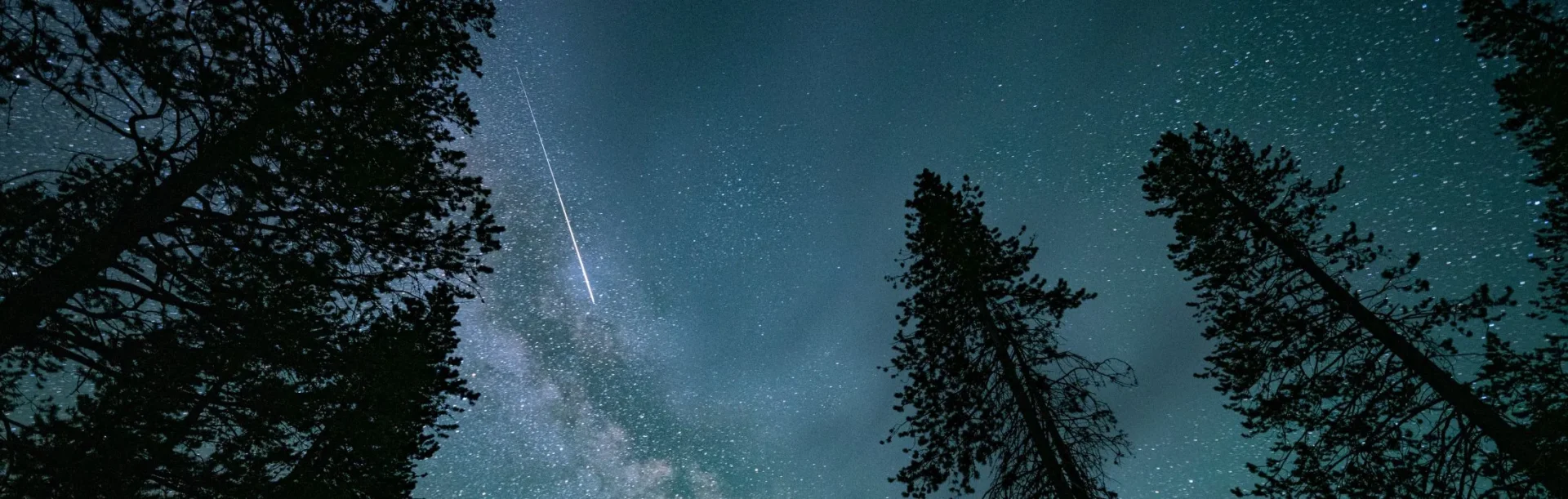
See Debris from Halley’s Comet
Every year, Earth passes through a stream of debris left behind by one of the most famous comets in history. The result is the Orionid meteor shower, a fast and beautiful display of shooting stars that returns each October. In 2026, the Orionids will peak on October 21–22, giving stargazers across Wyoming another reason to look up on crisp autumn nights.
If you’re looking for a meteor shower in Wyoming, the Orionids are especially interesting because every shooting star you see is connected to Halley’s Comet.
When Can You See the Orionid Meteor Shower?
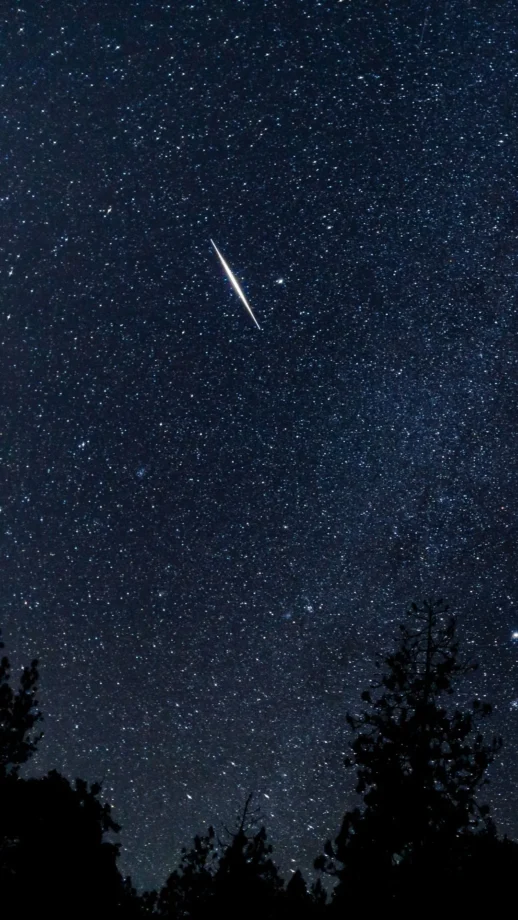
The Orionids are active from October 2 through November 7, with peak activity expected on the night of October 21–22. Under dark-sky conditions, the shower can produce roughly 10 to 20 meteors per hour at its peak.
The Orionids are known for their speed. These meteors enter Earth’s atmosphere at approximately 66 kilometers (41 miles) per second, creating quick streaks of light across the night sky.
For the best chance of seeing Orionids, plan to watch during the early morning hours after the constellation Orion has risen higher in the eastern sky. Meteor showers are generally best viewed after midnight, when the side of Earth you’re standing on has rotated into the direction of the incoming debris.
Why Are the Orionids Connected to Halley’s Comet?
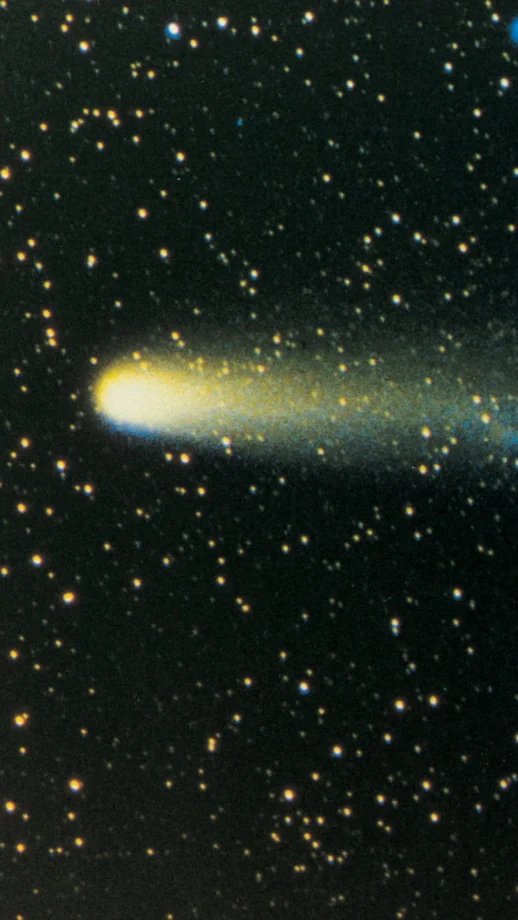
The Orionids aren’t random shooting stars. They’re created by tiny pieces of debris left behind by 1P/Halley, better known as Halley’s Comet, as it travels through the inner solar system.
As Earth crosses this debris trail each year, particles enter our atmosphere at extremely high speeds. Friction with the atmosphere causes them to heat up and glow, producing the streaks we call meteors. The meteors appear to originate from a point near the constellation Orion, which is how the shower gets its name.
In other words, watching the Orionids is a little like watching pieces of a comet’s history burn up above you.
Watching the Orionids in Wyoming
Wyoming is an excellent place to experience meteor showers because dark skies can make a tremendous difference in what you can see. Away from city lights, your eyes can pick up much fainter meteors than they would in an urban or suburban environment.
However, the 2026 Orionid peak comes with one significant challenge: the Moon will be about 80% illuminated during the peak. That bright moonlight will wash out many of the fainter meteors. The American Meteor Society notes that this year’s best dark-sky window will come during the few hours between moonset and dawn.
For observers around Jackson, Wyoming, the Moon sets at approximately 2:59 a.m. on October 21 and 4:00 a.m. on October 22, giving early-morning observers a better opportunity to catch some of the shower’s fainter meteors before sunrise.
That means you won’t necessarily want to head outside right after dinner. Instead, set an alarm, find a comfortable spot away from artificial light, and give your eyes time to adjust to the darkness.
Don’t Miss a Spectacular Meteor Shower in Wyoming
There’s something special about watching a meteor streak across a truly dark Wyoming sky. And while the Orionids may be best known for their connection to Halley’s Comet, they’re also a reminder of why protecting dark skies matters.
At Wyoming Stargazing, our work goes beyond helping people identify constellations and planets. We work to protect Wyoming’s night skies while creating opportunities for people of all ages to experience the science and wonder of the Universe.
If you’d like to experience Wyoming’s dark skies for yourself, join us for a private stargazing tour in Jackson Hole. Our astronomy educators use large telescopes and their knowledge of the night sky to help guests explore everything from planets and nebulae to distant galaxies—and, when conditions cooperate, shooting stars.
Ready to explore the night sky? Discover our stargazing experiences and plan your next adventure under Wyoming’s stars.


 Spanish
 English