

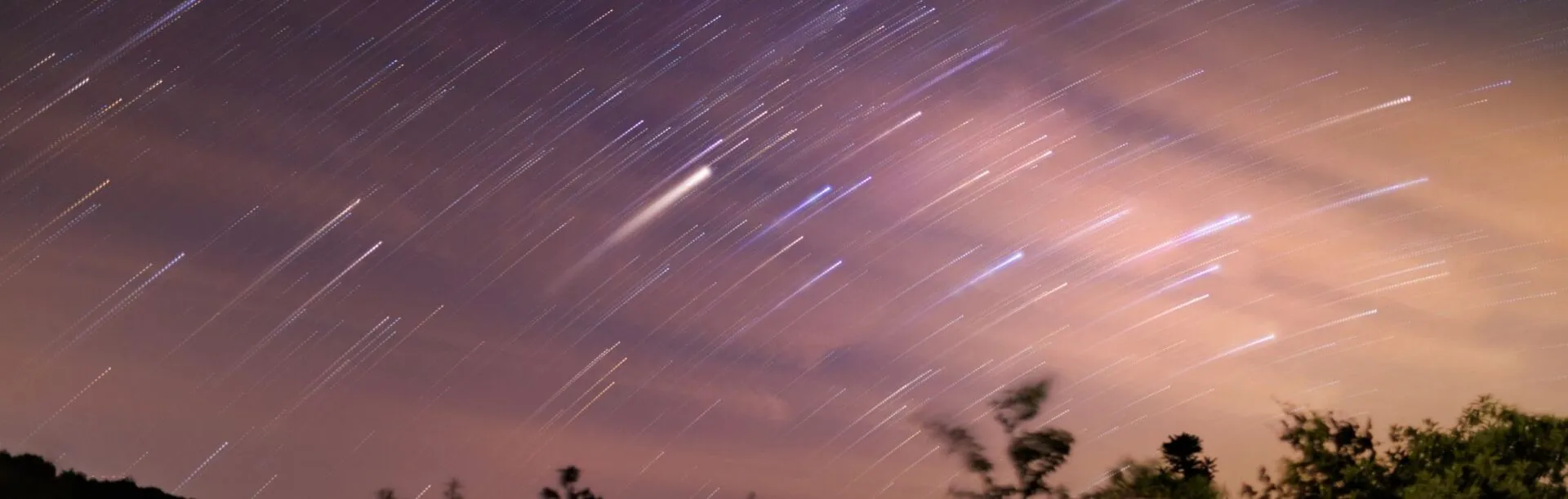
Draconid Meteor Shower in Jackson Hole: When and Where to Watch
Not every meteor shower requires staying awake until the early hours of the morning. The Draconid meteor shower in Jackson Hole is one of the unusual exceptions, with its radiant highest in the sky during the evening.
The 2026 shower is active from October 6 through October 10, with peak activity expected around October 8–9. Under ideal dark-sky conditions, observers could see around 10 meteors per hour, although the Draconids are typically a relatively modest shower.

What Makes the Draconids Different?
Most major meteor showers are best viewed after midnight, but the Draconids are different. Their radiant point, located near the head of the constellation Draco, is highest in the sky during the evening.
That means you can head outside shortly after dark and start watching for meteors without setting an alarm for 2 a.m. For visitors looking for an evening activity in Jackson Hole, that’s a pretty nice perk.
The Draconids are produced by debris left behind by Comet 21P/Giacobini-Zinner. As Earth passes through this debris stream, tiny particles enter our atmosphere and burn up, creating the streaks of light we see as meteors.
When to Watch the Draconid Meteor Shower in Jackson Hole
The best opportunity in 2026 will be the evening of October 8 into the early morning hours of October 9. The shower’s predicted peak occurs around 1:00 UTC on October 9, although meteor shower peak times can vary.
And there’s good news for Wyoming skywatchers: the new moon occurs on October 10, meaning there will be very little moonlight interfering with the Draconids during their peak.
Where to Watch a Meteor Shower in Jackson Hole
Dark skies make a major difference when watching for meteors. Get away from artificial lights and find somewhere with a wide, unobstructed view of the sky. Around Jackson Hole, protected public lands and the region’s International Dark Sky Community designation provide excellent opportunities for experiencing the night sky. The darker your surroundings, the more likely you are to catch the shower’s fainter meteors.
You don’t need a telescope or binoculars. In fact, your eyes are the best tool for taking in as much of the sky as possible.
Tips for Watching the Draconids
Meteor watching is wonderfully simple, but a few preparations can make the experience much more comfortable.
Bring warm layers, a reclining chair or blanket, and give your eyes time to adjust to the darkness. Avoid bright phone screens while you’re watching, and be patient. The Draconids aren’t known for producing a constant stream of meteors, so you may have to wait between streaks.
That’s part of the fun. You never quite know when the next one will appear.

See the Draconids With Wyoming Stargazing
Want to make your meteor-watching adventure more memorable? Wyoming Stargazing’s guided tours combine expert astronomy interpretation with some of the darkest skies around Jackson Hole.
While you’re watching for the Draconids, your guide can also point out planets, constellations, star clusters, and other celestial objects that would be easy to overlook on your own.


 Spanish
 English